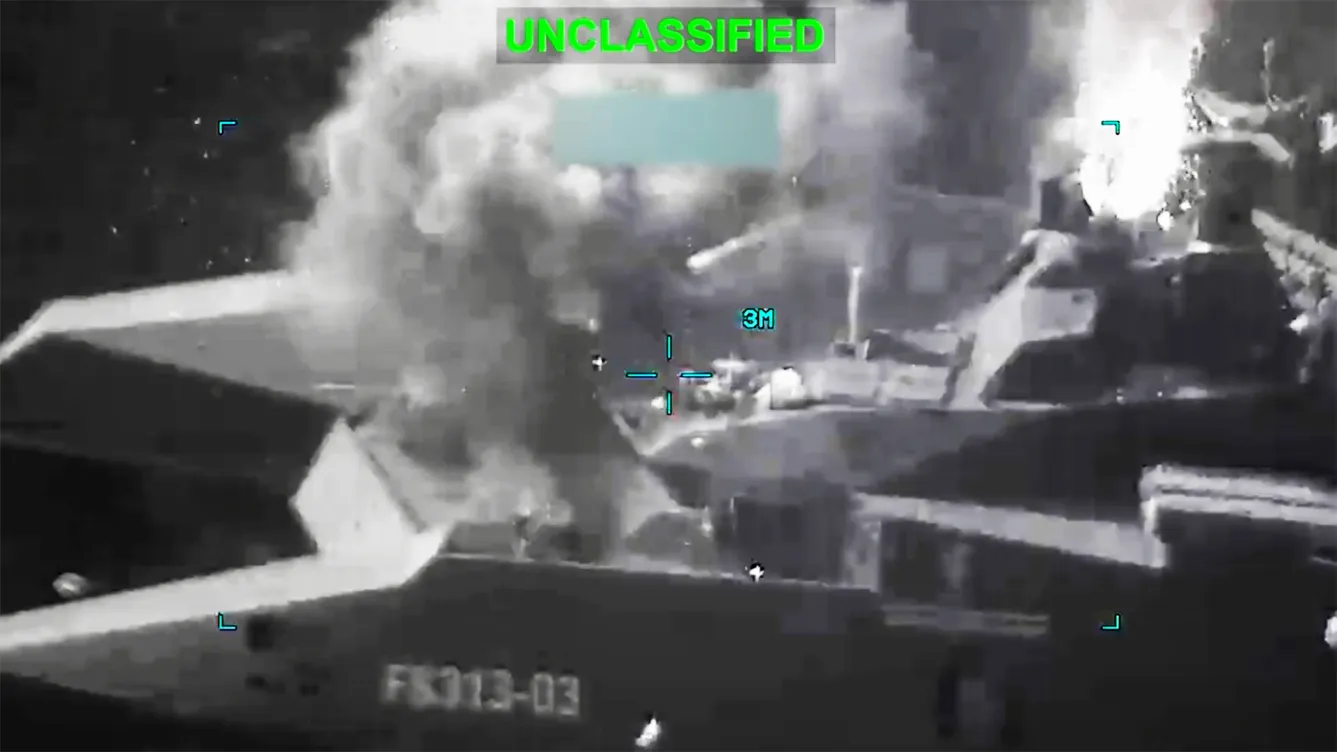
我们正目睹伊朗海军能力的彻底崩溃,这一过程日复一日地发生。今天早些时候,五角大楼宣布,美国海军一艘潜艇在印度洋击沉了一艘伊朗护卫舰,这是二战以来美国首次使用鱼雷将其击沉。现在,我们看到伊朗一艘最奇特、最先进的战舰——“沙希德·苏莱曼尼”级“沙希德·赛义德·设拉子”号(FS313-03)——被击中并起火燃烧的画面。据美国陆军部称,该舰随后沉没。
这是“沙希德·苏莱曼尼”级舰艇的首舰,于2022年服役,的确是一艘非常独特的舰艇。该舰专为近海作战而建造,对于一艘如此尺寸的船来说,它融合了许多有趣的特点。其中包括一个可发射两种尺寸导弹的垂直发射系统,能够发射防空导弹。此外,该舰还配备了反舰巡航导弹、舰炮系统和一个大型飞行甲板。显然,“沙希德·赛义德·设拉子”号的作战能力对其生存并无太大帮助,一段由美国侦察机拍摄的视频便印证了这一点。
事实上,仔细观察文章顶部的图片,可以看到一枚导弹似乎正从“沙希德·赛义德·设拉子”号的垂直发射单元中射出,或者卡在了发射导轨上。我们还可以看到舰艇周围有烟雾环绕。目前尚不清楚这是舰艇向攻击者发射武器,还是攻击者的武器击中了“沙希德·赛义德·设拉子”号。
值得一提的是,“沙希德·赛义德·设拉子”号的首舰是以伊朗伊斯兰革命卫队指挥官名字命名的,这位指挥官在特朗普第一任期内于巴格达机场附近的一次空袭中被美军击毙。 2020年的这起暗杀事件在很大程度上奠定了特朗普第一任和第二任总统任期内德黑兰和华盛顿之间的基调。
我们此前曾指出,四艘“沙希德·苏莱曼尼”级护卫舰中至少有一艘躲过了美国对其母港阿巴斯港的最初空袭。阿巴斯港是伊朗最重要的海军基地,位于霍尔木兹海峡。这艘舰艇在战争爆发前几天还停泊在泊位上,但在随后的卫星图像中却不见踪影。这艘舰艇很可能就是被击沉的那艘。
该级舰艇是伊朗最先进的双体战舰,其结构通常令人费解。尽管如此,这些舰艇仍然是伊朗伊斯兰革命卫队海军的活跃组成部分,并在该地区与美国海军军舰的近距离接触中发挥了作用。
继我们此前对阿巴斯港空袭的报道之后,我们查阅了最新的卫星图像,图像显示,在首次袭击中被击中的两艘护卫舰似乎已经沉没。停泊在该基地的伊朗最先进的基洛级潜艇也似乎已被击沉,其码头泊位旁留有一大片烧焦痕迹。美国中央司令部证实,昨晚的空袭目标是“伊朗最具作战能力的潜艇”。
加上此前战争中的损失,伊朗海军如今似乎已名存实亡。
We are seeing the total destruction of Iran’s naval capabilities unfold day by day. Earlier this morning, the Pentagon announced that a U.S. Navy submarine had made the first torpedo kill since World War II against an Iranian frigate in the Indian Ocean. Now we are seeing footage of one of Iran’s strangest and most advanced warships, the Shahid Soleimani class IRIS Shahid Sayyad Shirazi (FS313-03), being struck and set ablaze. The ship would later sink, according to the Department of War.
The first ship in her, the Shahid Soleimani, was commissioned in 2022, and is a very unique vessel indeed. Built for littoral combat, it incorporates a number of interesting features for a ship of its size. This includes a vertical launch system with two cell sizes that is capable of slinging air defense missiles. It also features anti-ship cruise missiles, gun systems, and a large flight deck. Clearly, Shahid Sayyad Shirazi‘s capabilities offered little help to its survival, as the video, shot by a U.S. surveillance aircraft, shows.
In fact, if you look closely at the image at the top of the story, it appears that either a missile is exiting one of the IRIS Shahid Sayyad Shirazi‘s vertical launch cells or it is stuck on its launch rail. We also see an image with smoke streaks surrounding the ship. It isn’t clear if this was it launching weapons at its attackers, or the attacker’s weapons finding their way to the Shahid Sayyad Shirazi.
It’s also worth noting that the IRIS Shahid Sayyad Shirazi‘s first-in-class progenitor is named after the IRGC commander that U.S. forces killed during the first Trump Administration in a strike near the Baghdad airport. This assassination in 2020 went on to largely set the tone between Tehran and Washington during the remainder of Trump’s first and now his second presidency.
We previously noted that at least one of the four Shahid Soleimani class corvettes escaped initial U.S. airstrikes on its home port of Bandar Abbas, Iran’s most important naval base that sits right in the Strait of Hormuz. The ship was at its berth just days before the war kicked off, but was nowhere to be found in subsequent satellite imagery. That vessel very well could have been the one sunk.
This of vessels is the most advanced of Iran’s catamaran warships, which are often configured in a puzzling manner. These ships are active components of the naval arm of the IRGC, nonetheless, and have played a part in close encounters with U.S. Navy warships in the region.
As an update to our prior reporting on the strikes on Bandar Abbas, new satellite imagery we have reviewed appears to show both frigates that were struck in the first attacks now having sunk. The single Kilo class submarine, Iran’s most advanced, which was docked at the base, also appears to have been sunk, and a large scorch mark sits next to where it was tied-up pier-side. U.S. Central Command confirmed it had targeted the “most operational Iranian submarine” in ongoing strikes last night.
Combined with losses earlier in the war, it looks like Iran’s Navy is nearly a memory at this point.